

Spring is knocking, and if you're planning to go to a festival, gathering, or market day between now and Easter, you've probably already priced a few tents. It's tempting to grab the cheapest gazebo on the shelf at your local hardware store, but that R800 pop-up won't survive a proper Highveld thunderstorm, let alone a summer season of events.
An affordable stretch tent isn't about the smallest number on the price tag; it's about what that structure can do for you over years of braais, weddings, and market stalls. South African weather is tough on shelter, and the right stretch tent setup, made from proper fabric and rigged correctly, earns its keep long after a bargain-bin gazebo has torn or blown away.
What Makes a Tent Affordable in the Long Run?
A tent earns the "affordable" label by costing less per event over its lifetime, not by having the lowest price on day one. A heavy-duty stretch tent from a proper manufacturer might cost more upfront than a retail gazebo, but it survives dozens of setups where a cheap frame folds after two or three outings.
Upfront Price vs. Repeat-Use Value
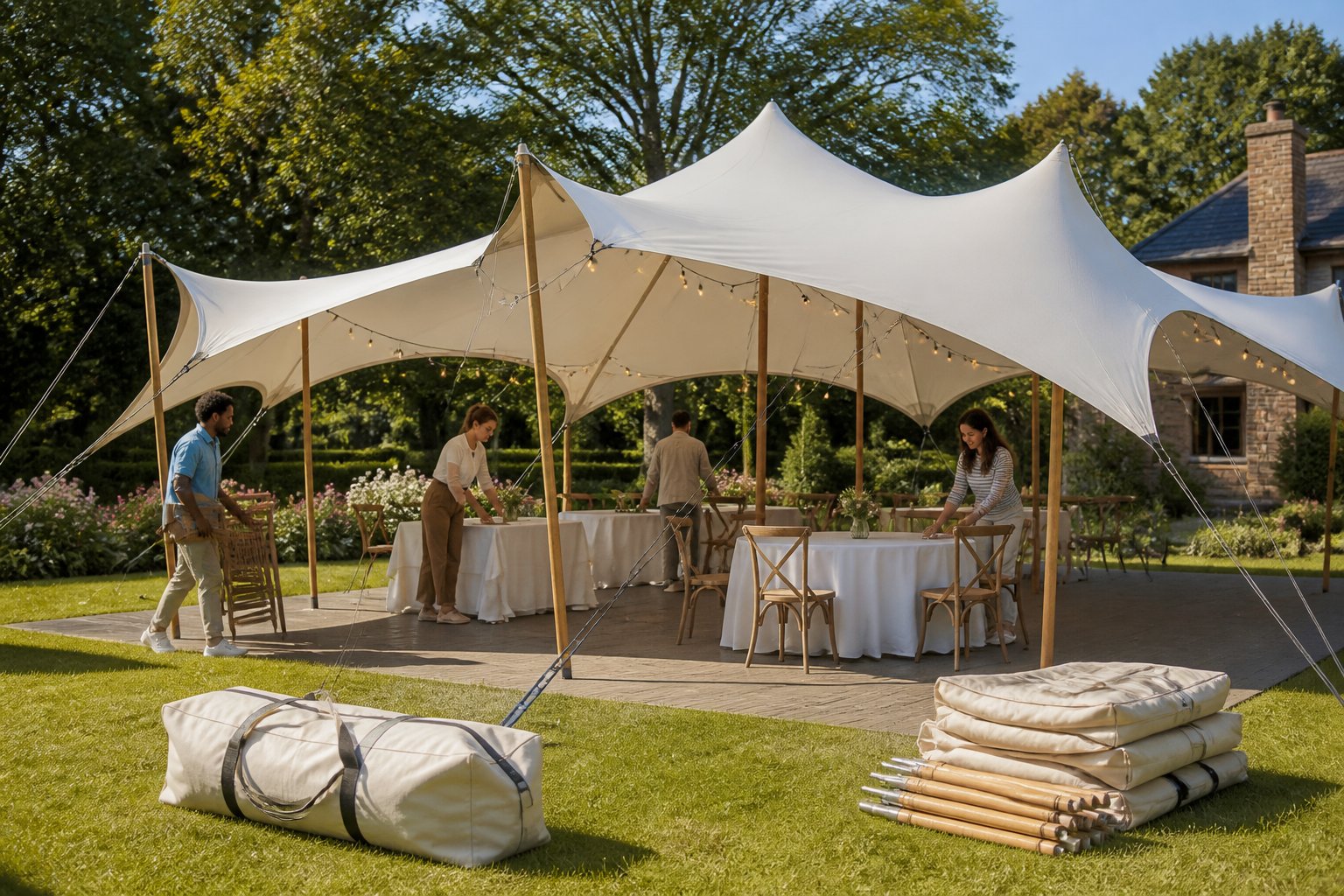
Smaller pop-up and pole tents are the budget-friendly choice. A tent built by us features reinforced seams, proper anchoring points, and a stretchy fabric designed to resist mould, mildew, and fading, keeping it in usable condition for far longer, as outlined in this breakdown of stretch tent durability.
Why Bigger Covered Areas Can Cost Less per Square Meter of Shade
Bigger stretch tents often work out cheaper per square metre of shade than smaller units bought in multiples. Buying one large 9m structure instead of three small gazebos means fewer seams, fewer poles to maintain, and one continuous covered area instead of awkward gaps between separate shelters.
How Local Manufacturing Helps Reduce Waste
Buying tents for sale from a South African manufacturer keeps your money in the local economy and cuts down on the throwaway cycle of imported budget tents. Our locally made tents also use stretch polyester with a minimum 90% UV block, a specification some imported budget tents don't meet, according to this comparison of stretch tent fabric grades.
Why Choose a Stretch Design Over a Retail Gazebo?
A stretch tent gives you more usable covered space, a more distinctive look, and better wind and rain performance than a standard retail gazebo. Where a gazebo is a rigid box with four legs, a stretch tent uses tensioned stretch tent fabric pulled over poles or frames, creating sweeping, sail-like shapes that flex with the wind rather than fighting it.
More Usable Space for Summer Gatherings
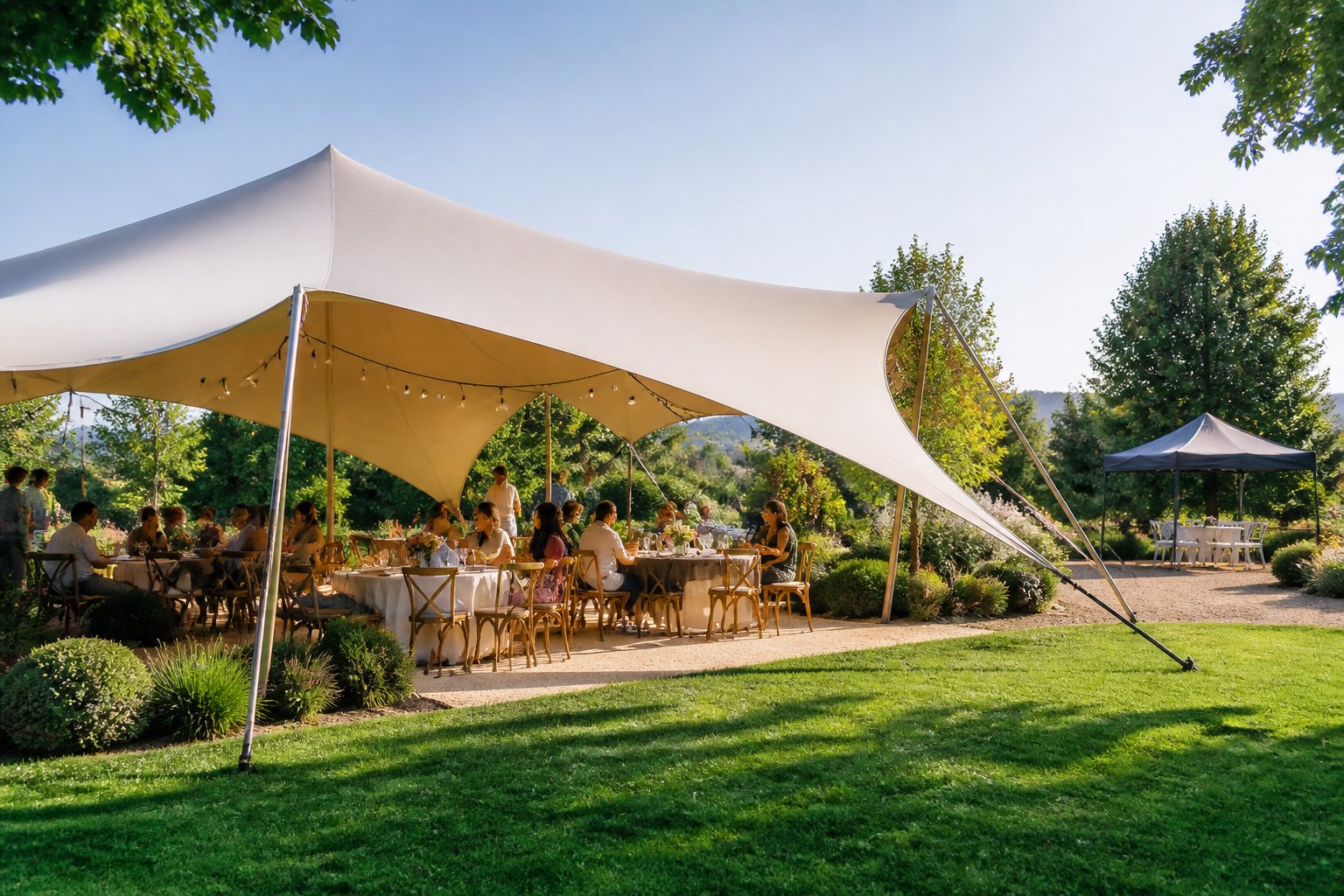
Stretch tents cover more open floor space per structure than gazebos of a similar footprint, since there's no boxy frame cutting into the middle of your seating plan. For private events like birthdays and matric dances, or community events such as church bazaars and school fundraisers, that open span means more tables, more dancing room, and fewer support poles for guests to dodge.
The stretched fabric shape also sheds heat and glare better than flat gazebo roofs, keeping the space underneath noticeably cooler on a scorching Free State afternoon.
Flexible Shapes for Uneven and Unusual Sites
Stretch tents adapt to sloped lawns, rocky ground, and awkward garden corners where a rigid gazebo frame simply won't sit level. Because the fabric stretches between anchor points rather than resting on a fixed frame, you can rig it over steps, around trees, or across multiple levels of a venue. Stretch tents give you cover options gazebos can't match on trickier sites.
Which Materials Stand Up to South African Summer Weather?
Fabric quality and proper tensioning determine whether your tent survives a Joburg hailstorm or a Cape gale, not just its size or shape. Our tents are made with locally manufactured stretchy lycra fabric that can flex in adverse weather conditions and not shake itself to destruction.
UV Exposure, Wind, and Correct Tensioning
South African sun is intense enough to degrade cheap plastic sheeting within a season, so fabric UV-stabilisation matters more here than in milder climates. Our quality stretch tent fabric resists fading and cracking under constant summer exposure.
Wind resistance comes down to correct tensioning as much as fabric strength. Some manufacturers rate their tents to withstand wind speeds up to 100 km/h when properly pitched, according to Home Bargain Tents' product specifications, with peaked rigging channels that direct rainwater away instead of letting it pool on the roof.
Reinforced Fittings and Anchoring for Safer Setups
Reinforced corners, stitched seams, and solid anchor points are what keep a stretchy tent standing through a sudden Highveld storm. Cheaper tents often skimp on stitching quality around stress points, which is exactly where they tear first.
How Do You Choose the Right Size and Setup?
Getting the size and configuration right starts with your campmates and site conditions, not with the size that looks impressive in a photo. Overestimating wastes budget on unused shade; underestimating leaves someone else standing in the sun.
Stretch tents, frame tents, pole tents, and peg and pole tents each suit different ground types and event styles, and picking the wrong one can mean a wobbly setup or wasted covered area.
Matching Tent Dimensions to Camp Setup and Style
Start with your camp count, then add space for your tent, kitchen setup, camping chairs etc. As a rough guide, a regular 4.5m x 6m stretchy is good enough for a single camp setup.
Open-Sided, Partially Enclosed, and Joined Configurations
Open-sided stretch tents suit warm-weather daytime events where airflow matters more than privacy. Partially enclosed setups, with side walls on the windward side, work better for evening functions or unpredictable spring weather.
Multiple stretch tents can also be joined into one continuous covered area for larger festivals or multi-day events, giving you flexibility to scale up without buying an entirely new structure.
When Frame and Pole Designs Are a Better Fit
Frame tents make sense on hard surfaces like paving or concrete where ground pegs won't hold. Pole tents and peg and pole tents suit soft, open ground and often cost less than frame structures of a similar size.
Marquees with rigid aluminium frames are a solid option for corporate branding or trade show setups where a squared-off shape reads more formal than a stretch tent's flowing lines.
| Setup Type | Best Ground | Typical Use | Setup Style |
|---|---|---|---|
| Stretch Tent | Uneven, sloped, mixed terrain | Camping, festivals, private events | Tensioned fabric on poles |
| Frame Tent | Hard surfaces, paving, concrete | Corporate events, trade shows | Free-standing frame |
| Pole/Peg Tent | Soft, open ground | Community events, markets | Poles with guy ropes and pegs |
| Marquee | Flat, even ground | Formal functions, branding | Rigid frame, squared shape |